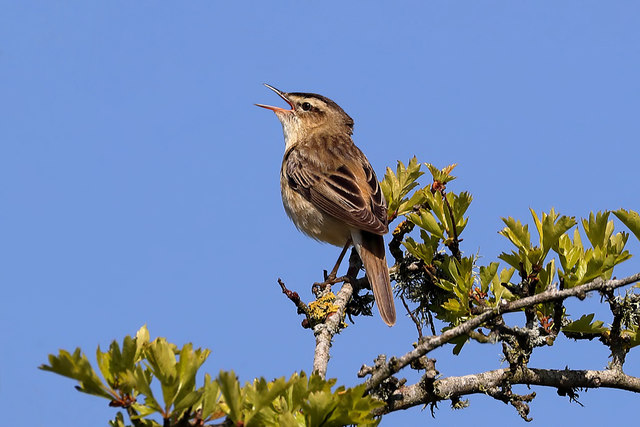
A little bird perched in a tree, Broke forth in pleasant harmony. With such abandonment her sang, A joyous musical refrain. His heart seemed ever full and sure. His song was beautiful and clear. He seemed to sing it for the King, A Higher source that ruled and reigned. For somehow, I distinctly knew, The Spirit’s breath must have blown through, And touched this tiny, feathered form. His Presence lingered in the song. I marveled at creative ways, The Lord will fill the earth with praise. How often does He stir and speak, In ways we humans fail to see? The wonderous songs of birds above, The chirp of crickets, croak of frogs. The gallant horse that gallops through, The waving grass that sings in tune. The harmony found in the sea, As whales and dolphins freely spray, Among the thundering waves—that Offer their uproarious praise. While looking at the world He made, We often fail to see the grace, And hear the sounds creation makes. To life in royal majesty, Outstanding praises for the King.
It was an autumn evening, two hours after the sun had set. The air carried the first fruits of a crisp chill that marked the end of the summer season. An overhead floodlight illuminated the large round pen where I was lopping Rose, a beautiful, five-year-old chestnut, quarter horse mare. Rose was pushing against the bit and as we moved along the inner side of the rail, she marked each strike of her front lead with an accompanying snort.
I had never ridden anything like Rose before! She was consumed with pent-up energy because she hadn’t been ridden in a very long time, and I struggled to hold her back from breaking into a gallop. With every ounce of her being she longed for a good gallop. With every ounce of my being, I longed to let her. But my friend was in the pen with me riding TJ and she wasn’t an experienced rider, so I had to keep Rose at a reasonably safe speed.
The next day, I began riding Rose on a regular basis and yes, I had plenty of opportunities to open her up in the pastures on Rocky Top’s property. When I learned that she was for sale, I knew that I had to bring her into the family!
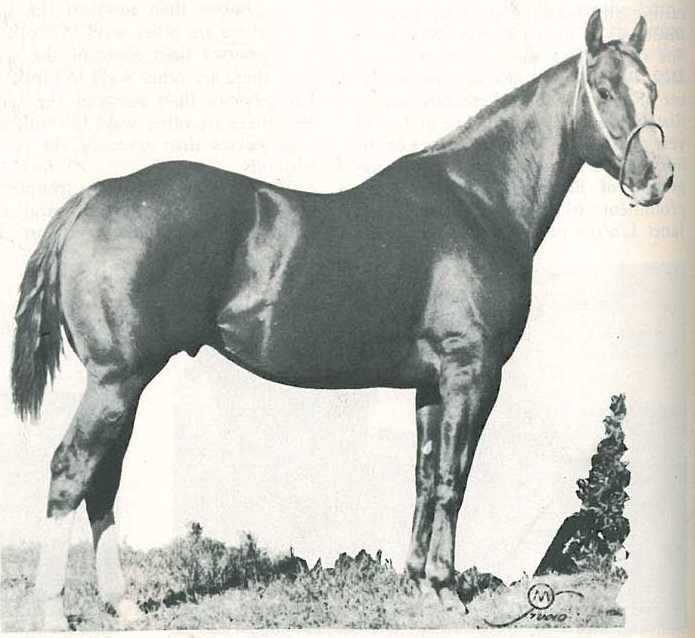
AQHA Stallion, Leo
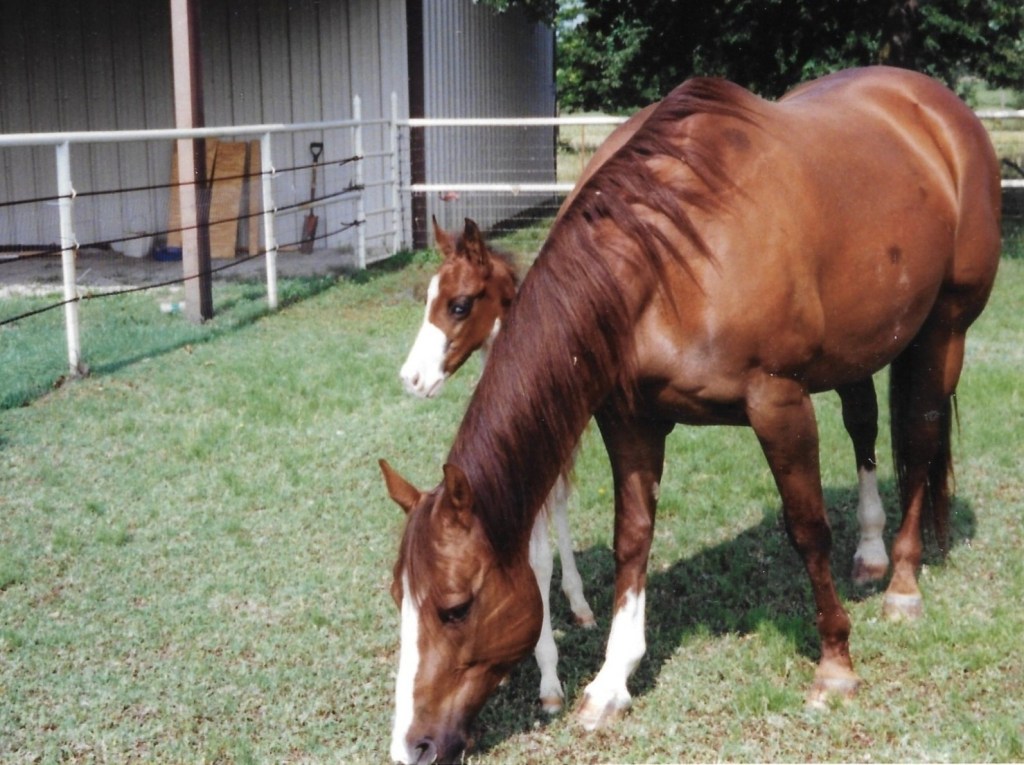
Rose was a great granddaughter of the AQHA stallion, Leo, and when I learned this, her energy and earnest need for speed made perfect sense. Leo was acclaimed in his early years on the racetrack, then due to severe injuries, was retired and used as a sire for breeding additional performance horses. Rose heavily resembled Leo too! Her chestnut coat, her confirmation and striking head with her snowy white blaze foretold that she was of his bloodlines.
Rose or Rosie and I, began our journey galloping across the autumn fields, heavily grazed down except for yellow wildflowers that grew thick along the ground. We galloped unrestrained as a team until she was spent, then trotted and finally walked to cool her down. But I also knew that I needed to start teaching Rose how to regulate her speed. When I began enforcing lessons on collection, she adamantly balked, shaking her head and snorting. This required dedicated years of consistent work, but we eventually got there.
Rosie was very intelligent, a quick learner and had a keen intuition when a child was on her back. All of my kids could ride her. It was only with me that she allowed her spirit to fully shine. If her rider’s position “felt” precarious, Rosie came to an immediate halt.
For several years I spent about five days a week with Rose. Eventually I moved her away from Rocky Top to a closer location. But housing developers began to make monetary offers to stable owners for their land. These offers were too good to resist, and the property was sold. Two of the stables where I boarded sold their properties that were soon turned them into housing additions. After moving Rose 2 times, I found myself faced with a dilemma when I had to board her almost 45 minutes away from my house. Jeff and I resolved this problem by purchasing property with an open stable for Rosie. Suddenly, she became part of the family’s everyday activities. I couldn’t have been more thrilled.
There were two situations turned my mare into a puddle of anxiety. One of them was thunderstorms. Thunderstorms frightened her to the point that she would colic! Almost every thunderstorm while we were at Rocky Top Rose ending up at the veterinarian’s clinic. This was something I was keenly aware of when we moved her on our property.
Rosie was my soulmate horse. Together we watched and implemented the Natural Horsemanship training concepts as they swept the world. These new concepts were based on animal science research, and they changed the way most of us handle our horses. I was an advent student of these new methods, and as I applied them while working with Rosie, a magical, close bond that I had always longed for developed between us. It was spiritual really. The kind of bond where you to know what your horse is thinking. Suddenly Rose was whinnying at me when I appeared and nickering greetings trotting to me when she saw I was heading toward the barn.
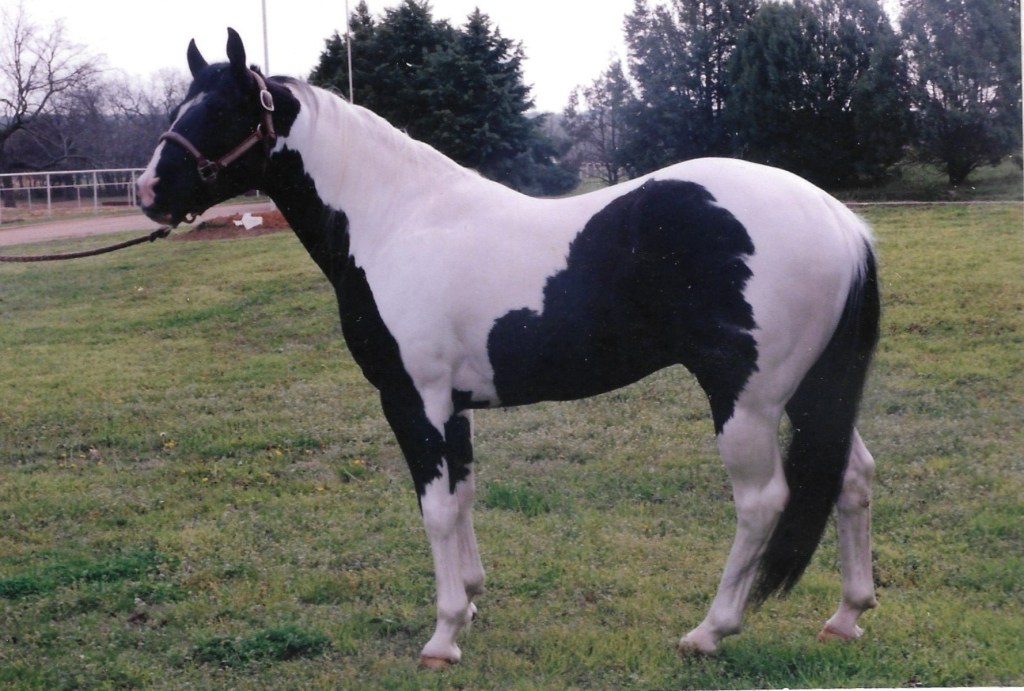
Several months after we moved Rosie to our property, I took her back to Rocky Top to breed her. Her stallion was a stunning black tobiano. The two of them took a liking to each other and when I brought Rose home, she called for him heartsick. While Rose was being breed, hideous fires broke out in Mexico, filling the air with a heavy, thick smog. While our little baby was at its most fragile state. As it took form and grew, livestock around us were dying from the unhealthy atmosphere.
Rosie’s Stallion
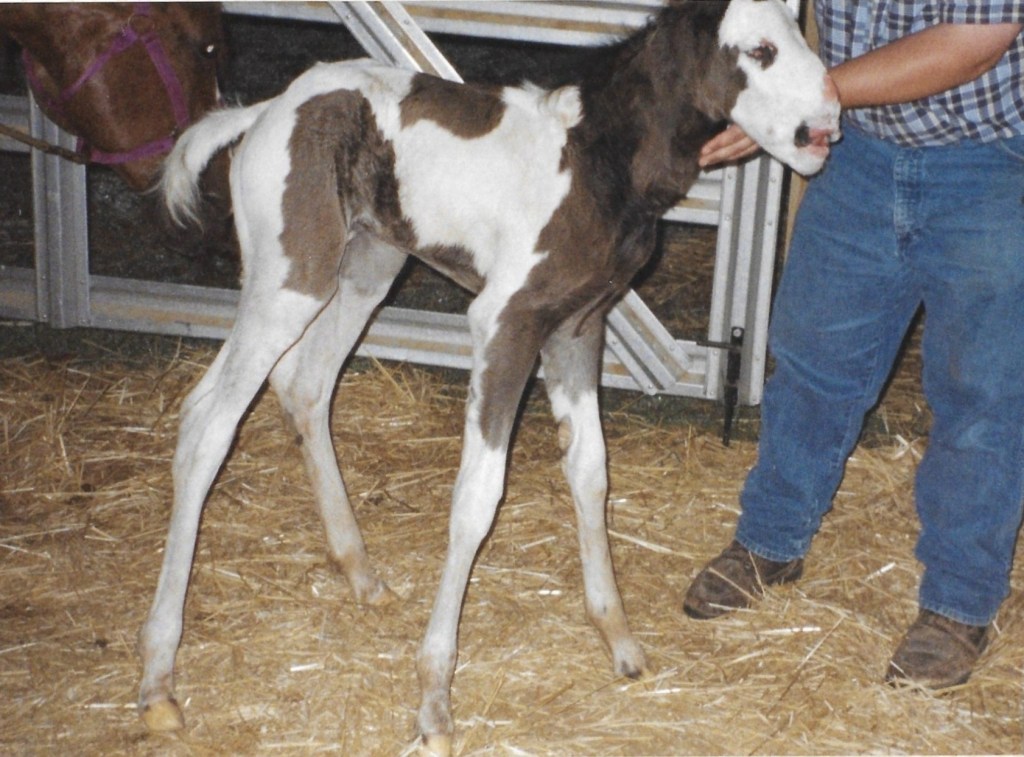
This is a subject that is still, to this day, very difficult for me to think about. The memory triggers the same heartsick emotion, I felt so many years ago when Rosie’s foal, Phantom, was born. He was so hideously deformed that we had to had to quickly and humanely euthanized him.
Rosie’s Phantom
My veterinarian told me that he knew of other horses and cattle that were giving birth to babies with similar deformities. I was devastated. The next day I called my friends at Rocky Top and something truly magical happened.
Throughout my life, I have enjoyed a career as an actor. I was very fortunate enough to work with some very skilled directors and trainers who taught me the art of character development. They also taught me how to use my personal experiences, my pain, to bring to life a character that I was portraying. While my children were young, I was a stay-at-home mom, except for a 20-year career in the fitness industry that allowed me to schedule my work around the children’s needs. However, during these years, I also learned that I could “act” and develop characters on paper and soon I became a published writer.
After a few years had distanced me from the tragic night that Rosie’s foal was born, a story began to form in my mind. The plot centered on a horse I molded after Rose, named Mahogany, and my two daughters, Juliann and Michele, who were both facing extremely difficult circumstances in their young lives. For five years I played with the storyline in my mind, before literally, taking pen to paper.
Then an amazing thing happened, Jeff and I bought a 100-acre ranch in Brock, TX. The ranch was to use on weekends, but I often spent a week or two there. After exploring the land, I was stunned to discover that the layout was almost exactly the same as the fictional ranch I had created for the Caldridge family in my book. So, I decided to format the layout of the land and out house, as the Caldridge family’s homestead.
Thirty some years later, that first book has become a 3-book series that I call Emerald’s Hill. The first book, Mahogany – Blaze, is the book that I’m working toward having published.
As daylight broke, the morning after I had to tragically euthanize Rosie’s foal Phantom, a baby that I had loved and anticipated even before he was born. I went back to the stables to let Rosie outside. I knew that she wanted to look for her foal and she did. Watching her and listening to her call for him was one of the most heartbreaking moments in my life. So, I busied myself by cleaning out her stall, replenishing straw, soiled from giving birth with fresh shavings, trying to ignore her frantic whinnies as she ran the diameters of the pasture.
I cannot express the pain I felt, not just because of the loss of our foal, but mostly watching Rosie suffer. This was the first time I had experienced a situation like this. Because of my lack of knowledge, and the incompetence of the veterinarian, I didn’t realize that I should have let Rose see and sniff her foal after he was euthanized. This way she would have a better understanding of the loss. But in the heat of such a traumatic situation, you don’t always think straight. At least I can say that I never made that mistake again!
Somehow, I needed to find a little foal. Not just for Rose, but for me too. Something joyous to fill our loss and sorrow. Surely, somewhere in the vast DFW metroplex there was a foal that needed a good home. Perhaps I could find one that was recently weaned.
The first person I called was my friend who was also the breeder. I told her what had happened, expressing my need to buy a young horse. She listened and said she would call me right back. When I look back on the series of events that took place next, I am filled with absolute awe. My friend had a cherished mare that they used for breeding. A little paint mare, whose previous foals I was very familiar with.
This little mare was very sick, and the decision had been made to euthanize her that morning. The reason they had prolonged her life was because she had a tiny little filly that they were trying to keep alive on the mare’s milk. But, because of her illness, the mare’s milk supply had been poor, leaving the foal small and frail. Even though the filly was two months old, she looked like a two-week-old foal. On top of that, her sire was the same stallion that sired Rose. It was decided, that after they put the mare down, my friend was going to bring the filly over to me and give her to me. I couldn’t believe this was happening!
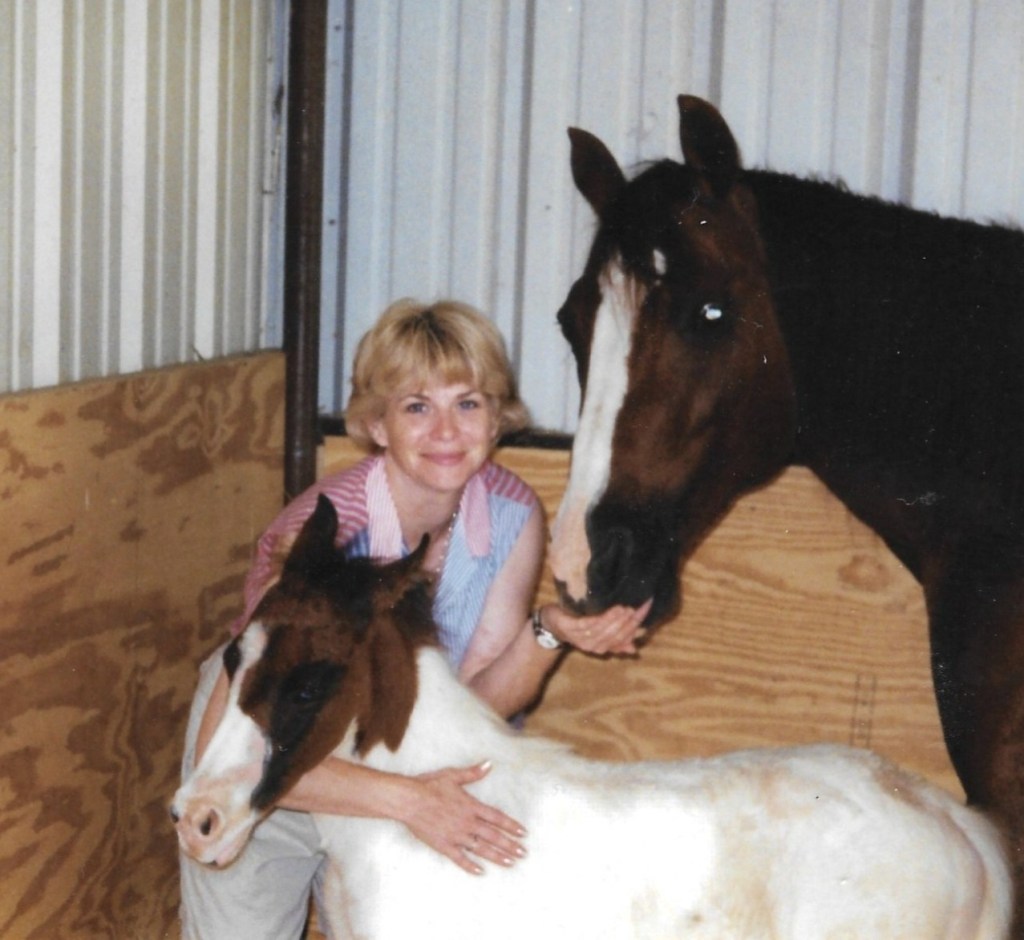
By 10:00 that morning a big diesel truck pulling a large trailer pulled into my driveway. The truck stopped, and I heard a hearty little whinny echo from it. I cannot tell you the well of emotion I felt as I laid eyes on the most adorable filly. She was perfect! A paint, pure white with a bay and black face, one blue-eye and one brown. Her tail was all white with a black tip. We unloaded her and led her toward Rose, with the baby whinnying the whole way.
Rose heard the calls and could hardly contain herself. It took a great deal of effort to restrain her enough to safely bring the filly into her stall. However, after one sniff, she knew that this baby was not hers! Suddenly, Rose wasn’t interested in cooperating.
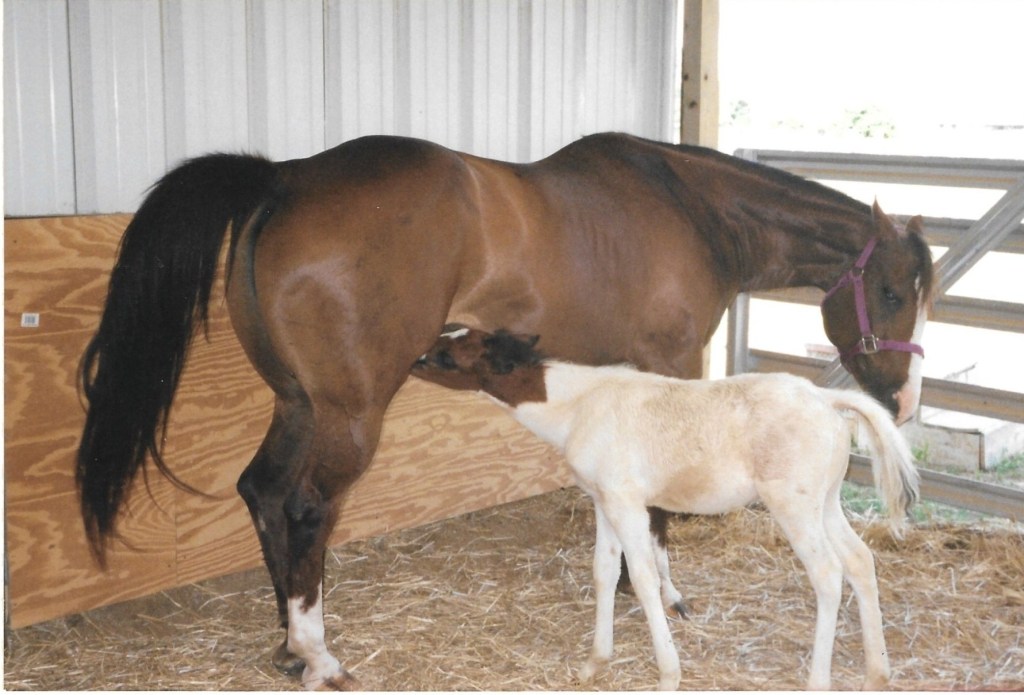
I had been smart enough to keep the placenta from Phantom’s birth. We gave Rose another sedative and rubbed the placenta all over the filly, keeping it on her back. Rose took another sniff and began to lick the filly. In just a matter of minutes Rose allowed her to nurse, standing contently, relieved to have her milk engorged utters drained. The moment was pure magic for me. Especially knowing that the filly, named HaDassah’s Heart, which means Star’s Heart, was getting all of Rosie’s rich milk full of colostrum.
The first magical moment when Rose let HaDassah nursed.
By 5:00 that afternoon, HaDassah had completely won the heart of her new mama. This was evident when Rose unhesitatingly shared her oats from the same bucket. By 8:00 that night, you would never have guessed that HaDassah was not Rose’s original foal. The two were inseparable. My head was swimming with how God showed not only me but Rosie and the filly mercy. The three of us desperately needed each other.
Twenty years ago, I wrote the above account of this story. I wrote it as I watched Rosie and HaDassah grazing in the pasture, side by side. I quickly learned that if a family member was with Rose, she accepted a stranger around her baby. But if a stranger tried to get close, without one of us, especially me, Rose’s response quickly scared them away.
Within a week of nursing on Rosie’s milk, HaDassah was thriving. She had doubled her size and was no longer able to walk under Rose’s belly. Her mane and tail had grown. She was walking with a halter and lead. All seemed bright and wonderful, until…
It began with HaDassah scouring. Scouring is the term used when a horse has diarrhea. My veterinarian didn’t tell me, but I have since learned that scouring can occur in foals when they are suddenly taking in more nutrients that they are used to. Especially when the food source is changed too quickly, which was the case with Hadassah.
Knowing how quickly this condition can get out-of-hand, I called my vet. HaDassah’s temperature was normal, all her vital signs were good, so there seemed to be no threat. However, the condition worsened, becoming profusive and was quickly spinning out of control. What’s more, I could tell that my filly was beginning to stress from the condition. Again, I called the vet.
This time HaDassah’s temperature was elevated, confirming my concern that she had developed an infection. The vet started her on antibiotic treatments which required me injecting her three times a day, which she and I both hated! Still her health declined. I called the vet again.
I have since learned that “colitis,” was the condition that we were dealing with and that colitis can quickly become fatal, which it did. All the signs and symptoms were there. HaDassah’s diarrhea increased to an extreme, becoming constant and watery. Her fever elevated. She became listless and was in obvious pain.
The situation climaxed on an evening when Jeff was out-to-town. I called the vet gravely alarmed. By the time he arrived at my house, HaDassah was trying her best to roll in what looked to be full-blown colic. I was trying to wrap my head around how a horse with profuse diarrhea was able to colic. Colic is when a horse has an obstruction in the gut, which causes a buildup of gas which is extremely painful and often deadly. The horse rolls in an attempt to elevate the pain, which can cause the gut to rupture. Therefore, it’s essential to get a horse who’s colicing up and walking.
The vet agreed, it was colic. In addition, HaDassah was having respiratory problems due to pneumonia. Rose was hovering over us concerned too. The vet asked if I could remove Rose, so I called my son Chris to help me with her while I assisted the vet with HaDassah. Bad idea…
Haltering Rose, Chris led her out of the stables into the pasture to walk her, trying to ease her anxiety. In the process, Rose became uncontrollable. I should have known better and simply put Rose into an adjoining stall, but I wasn’t thinking straight. The next thing I knew, Chris’ friend, Brian, ran into the barn wide-eyed and breathless, announcing that Rose had kicked Chris in the head and knocked him out. About the same time Brian appeared, Rose came bolting into the stall. I quickly secured Rose in the adjoining stall, where she would be safe, and instructed Brian to call 911 while I fled to assist Chris.
When I reached him, Chris was sitting up dazed, holding his head. Thankfully, he was alert. An ambulance arrived, took Chris to an excellent trauma center in Fort Worth. I checked on the vet, who told me that the situation with HaDassah was very grave. He wasn’t sure she would survive. I left for the hospital, while Brian stayed my son Andy and daughter Juliann. Halfway to the hospital my phone rang—HaDassah had died.
Upon arriving at the hospital, I was greatly relieved to hear that Chris was alright. He had only suffered a mild concussion; there was no permanent damage. We stayed in the hospital for the rest of the night, arriving home as dawn opened her eyes. After tucking Chris in bed, I found Rose, depressed in the barn docile and exhausted. I was exhausted too, but sleep evaded me.
It wasn’t until I researched the condition of scouring in horses, particularly in young foals and the causes and effects, the I realized that HaDassah was a textbook case. For a couple of decades, her death had remained an embarrassment that left me riddled with guilt.
And may I interject, what happed to HaDassah should have been properly diagnosed by the veterinarian at the first call! This is why a trustworthy, good vet is always needed when you have a horse.
Even after my research on the internet brought clarity to HaDassah’s condition. I was still so embarrassed by her death that I almost didn’t include this sweet filly in my story. But what happened to HaDassah is a story worth telling, so others facing such a similar situation can understand and know they are not alone in their horrific struggle. As horse owners we learn as we go along, facing and learning about conditions when they come our way.
After HaDassah’s death I wrote the following poem:
A NEW BEGINNING A gentle rest, a quiet peace, that sooths and calms the deepest grief. His Presence hovers close and near. His words bring comfort chasing fears. They urge me to keep going on, despite the storm raging on. A storm that threatens to destroy my faith. With hurt and death, a senseless waste, my mind can’t understand, Why He allowed these tragic ends. And yet, I hear Him say to me; I’m in control, so trust in Me! This trauma never was My will. But trust in Me to ease and heal, The violence you have seen will cease, for in its midst I speak forth peace! You may not see it with your eye, let faith inside you heart arise! Now cling to Me My precious child, and speak My promises out loud. As vicious darkness scares and strikes, My Spirit overcomes the strife. So, as you walk the shadowed path, Be still My child—be still and know—That I Am God! A gentle rain begins to fall. No lightening near, no thundering clouds. Brings with its tranquil misty drops, the hope of healing from what’s lost. The promise of a brighter day. The washing of what’s lost away. Each raindrop seems to speak and say: A new beginning starts today.
Now, when I think of Phantom and HaDassah, I see them both grazing beside Rosie in heaven’s pastures. During that time of deep heartache and darkness, I didn’t know what God had in store for Rosie and me. That another baby horse was coming into our lives and that he would bring us both joy beyond our wildest dreams.
At Rocky Top, when I first began riding Rosie, we pretty much had the pasture to ourselves, which allowed us opportunities to gallop without riling other horses to join us. Several months later, I began to see new horses in the pasture, which was fine, as long as they left Rose and me alone. What I mean by this is horses tend to move as a herd, so when one decides to run, generally a few others will join in on the fun, which can turn into a dangerous situation, one I wasn’t ready to risk.
One late afternoon, while Juliann had riding therapy and my boys played, I had separated Rose from the herd and was warming her up at a brisk trot. She was moving to a nice, rhythmic beat, when unexpectedly she bolted into a sidestep.
What in tarnation was that all about? I wondered.
As soon as the question entered my mind, she did it again, this time pivoting around with her ears pointed, nostrils flared, eyes wide, snorting heavily as if trying to rid herself of an offensive smell.
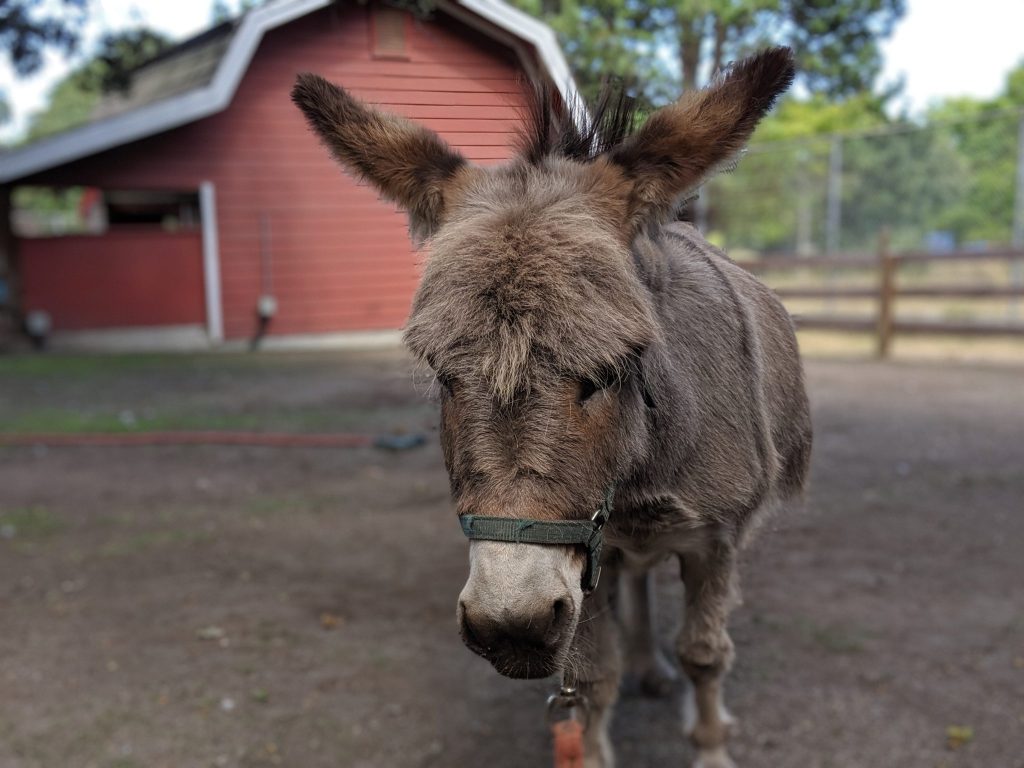
There, standing to the side of us stood a little donkey, looking very forlorn and lonesome.
As my heart went out to the little guy, Rose continued to snort, staring at the donkey with utter distaste. I gave her a reassuring pat, turned her around and signaled for her to trot forward. She sidestepped the first few steps, keeping her eye on the donkey, before easing into a nice pace.
I was enjoying myself immensely, when suddenly, she bolted again, pivoting round to stare at the donkey who was following us.
Great, I thought. I positioned Rose, so she could get a better look. She merely snorted in distaste, backing up while the donkey watched, looking very rejected. I turned Rose asking her to go forward again. She did so, prancing like she was walking on hot coals. The donkey trotted after us. Rose stopped, pivoted to face it and pooped, body quivering.
After having enough of these shenanigans, I asked Rose to canter, which she willingly did, taking a commanding lead far away from the donkey, who watched us from the other end of the pasture. However, out-of-sight did not mean out-of-mind! Rose held her body taunt and was skittish, making our ride unpleasant. I, on the other hand, was determined to enjoy the afternoon. I forced myself to relax in the saddle, believing the donkey was no longer a threat. Besides, it seemed a shame to waste a beautiful afternoon.
Several minutes later, I was completely relaxed. Rose too was calm and had dropped her nose to graze. Suddenly, out of the corner of her eye, she saw the donkey. It had worked its way through the woods to where we were. In an instant, Rose bolted into a full gallop, leaving me momentarily suspended in the air for a few fleeting seconds before I crashed hard to the ground. This was the first and only time Rose ever threw me. I sat on the ground with the donkey watching me.
Needless to say, I learned to humor my horse. We stayed out of that pasture while the donkey was there. Likewise, I learned that any animal other that a horse, dog, cat, bird and occasional bunny, was perceived by Rose as a horse eating monster. Oh, she hated puddles of water too although we worked through that one!
If a trail took us to a field that had a donkey in it, I would have to dismount, cross the roadway and lead my jittery horse who practically pranced on the toes of her hooves past the poor donkey. When I moved her to a stable in Roan, the road that led to the riding trails passed a farm that actually raised and bred miniature donkeys. You would have thought the world had come to an end!
After selling my horse Missy, I spent the next five years taking horseback riding lessons, mostly English disciplines. Two months after my son, Andy, was born, my husband’s job moved to Connecticut, where we settled in the city of Norwalk. Jeff’s brother and our sister-in-law lived in Manhattan and soon the excitement in NYC became our playground. In Connecticut I found an adorable little stable and enrolled into riding lessons. I also rented horses to ride along some marvelous trails. One of my very favorite being the riding the trails through Central Park in NYC.
From my very first riding lesson, my method of fluid, relaxed riding was suddenly restrained. I was taught to keep my toes in unnatural forward positions, My seat had to be perched so that I was sitting straight up on my pelvis bones. Thanks to many years studying ballet, I was able to contort my body into positions that please my instructors, but thwarted relaxation into, tight muscles, which eliminated the fluidity that Missy had taught me when I learned to ride her bareback.
At that time in my life, I didn’t perceive myself as an excellent rider. There was so much that I knew I had to learn. The hunger to become an excellent, accomplished rider, fueled my determination to persevere and continue on with my lessons.
One of the most interesting aspects to horsemanship in Ohio and Indiana versus riding out east, was the different opinions regarding riding positions and the phraseology. I also discovered that the mid-west trainers were much more layback and approachable, whereas out east, they tended to be aloof, stuffy and unapproachable. Years of studying classical ballet, had already seasoned me to the world of stuffy and unapproachable.
The personal goal that has always fueled my passion for horses is my interaction with them. This interaction starts with the groundwork and transitions into your riding. The showring had never been my ultimate goal. Even though I understand the joys in competing and engaging with others and their horses in the mutual goal to win a blue ribbon. I greatly respect all of the years of training and hard work and money that goes into a performance horse that only shines with an equally skilled rider. But I simply wasn’t interested! What did interest me was achieving a close, almost telepathic bond with horses, like the horse/human bonds and relationship that I had read about in classic horse stories when I was a kid.
As others around me verbalized the need to use force to get a horse to respond in a certain way, and raised their voices against handling foals too much, or horses in general for that matter, because you might spoil them. I was secretly summoning horses into my personal space, because physical closeness to them, the delicious smell of their lovely coats and intelligence in their expressive eyes was something I desperately desired to be close to
However, my eastern riding escapades quickly came to an abrupt halt, when only four months after moving to Connecticut I, once again, became pregnant. Almost immediately the pregnancy became high risk. I prematurely gave birth to my daughter, Juliann (Juli), and began my journey as a parent raising a child with special needs—cerebral palsy. Three years later my family moved to the DFW area in Texas, where roots were established, and my children grew up.
Immediately, I enrolled Juli into our school district’s early childhood education program. One of the school’s physical therapists suggested that I look into a “hippotherapy” program, which used horses to help people with special needs develop better muscle control. I firsthand understood the emotional support equine therapy provides, but hippotherapy taught me about the physical benefits of riding a horse.
Hippotherapy, or physical therapy on horseback, uses a horse’s movements to help develop a patient’s balance and coordination, as well as increase their muscle strength. When a horse is walking, the movement mimics the same physical patterns of a person’s walk. Every step a horse takes transfers movement to the legs and pelvis of that person. In addition, riding a horse can help a person find their center of balance.
The goal is to stimulate the muscles of the individual, using the rhythmic gait of a horse’s walk, so that over time, the repetitive movement will eventually imprint to the individual’s “muscle memory.” Muscle memory happens when any movement is repeated over time such as the disciplines of swimming, dancing, creating art, playing a musical instrument, sports and learning to walk, our brains form a memory for that activity. And as time progresses, with plenty of practice, an individual is eventually able to perform that activity effortlessly.
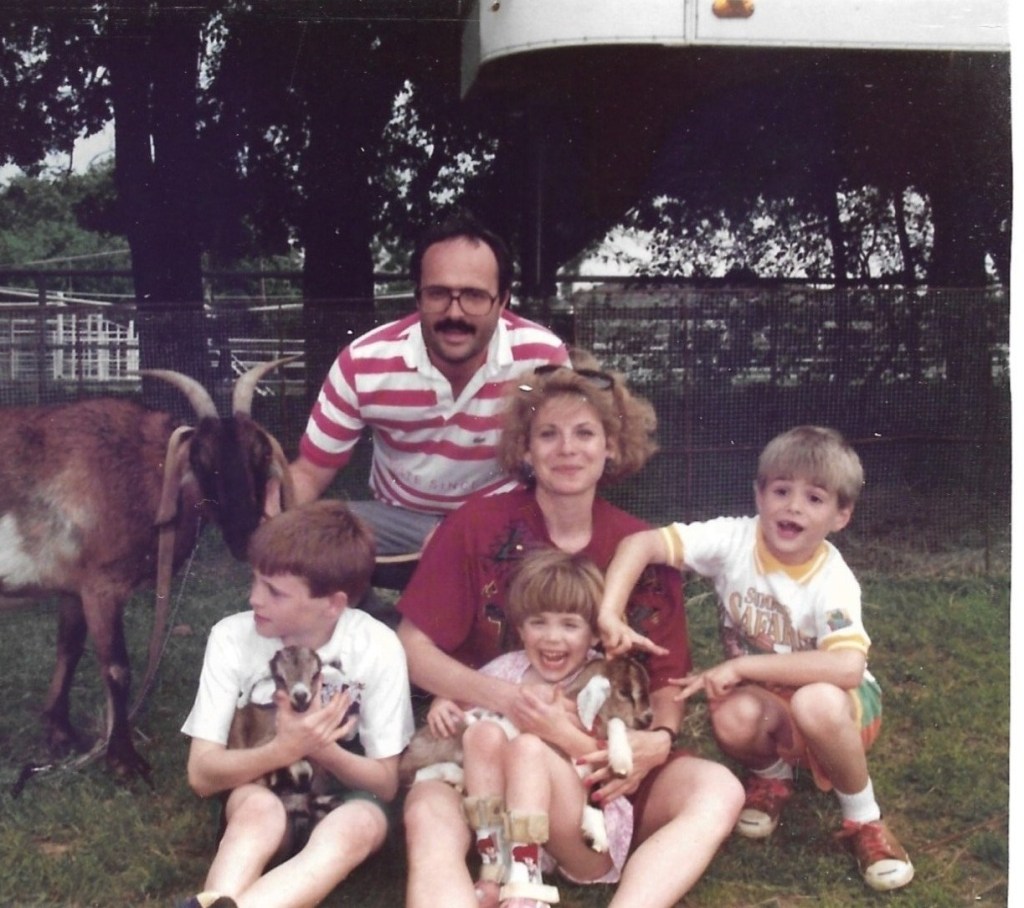
Anna Belle, the mother goat; Jeff, Chris & Clarince, Me with Juliann & Clarice and Andy. Anna Belle kept nibbling on Chris’ hair, that’s why he’s looking over his shoulder at her.
Juli’s hippotherapy was scheduled to take place in a lovely stable, in Keller, Texas, called Rocky Top Ranch. Not only did Juli take to riding horses like a duck to water, but my boys also loved it too. Rocky Top became our playground with its wonderful pastures, annual offspring of foals, haylofts, baby goats, peacocks, a pond and a huge sow named Sarah Beth. Often the kids’ friends tagged along. For me, being once again submerged in the delicious world of horses became my respite from work as a fitness professional and the stresses of raising children who all had special needs ranging from learning disabilities to very gifted.
If I were to guess, I would say that there were probably over 100 horses on the ranch, not counting the foals. Some of the horses were privately owned by boarders, many of whom became my friends. Others were used for hippotherapy, there was a handsome palomino stallion named, Keno and broodmares who produced 40 to 50 foals that were born on the ranch every spring. My kids and I will never forget Paco, a friendly boy who always popped his bottom lip out of boredom. Rocky Top was not just a therapy program, is was a fully functional equestrian facility.
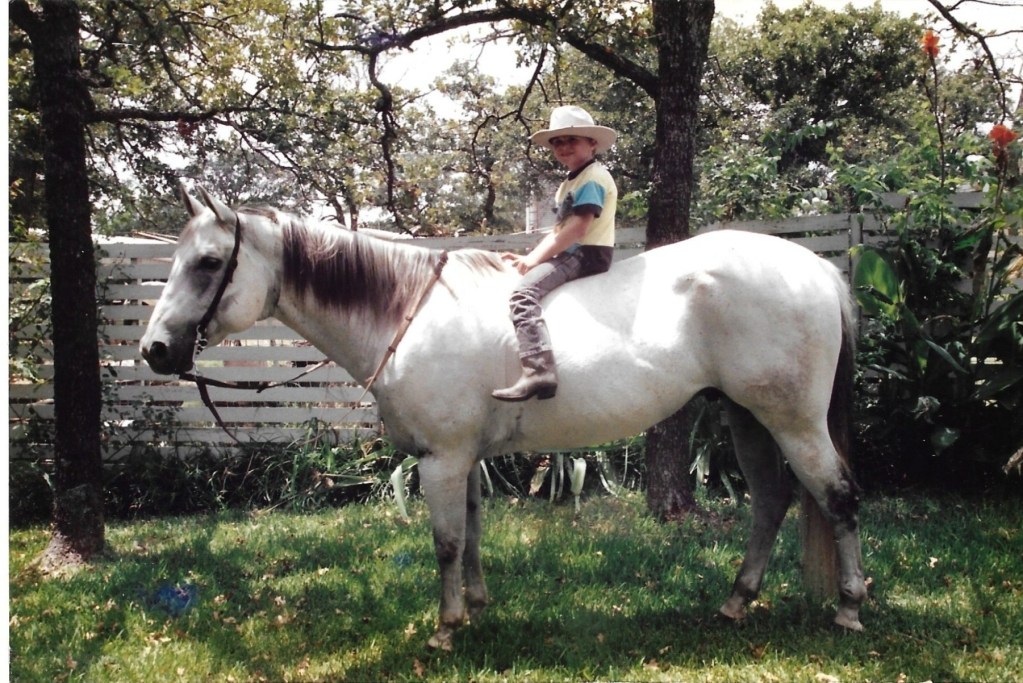
Shortly after the kids and I became part of the ranch, I began to step in and help halter train some of the foals. Working with these babies really sharpened my equestrian knowledge and skills, mainly kept me on my toes because of their tendency to spontaneously combust. One afternoon I asked the owner if he had a horse that needed exercise ride and if I could ride it. That’s when I was introduced to my next horse, a beautiful gray Quarter Horse, gelding named TJ.
Juliann & TJ
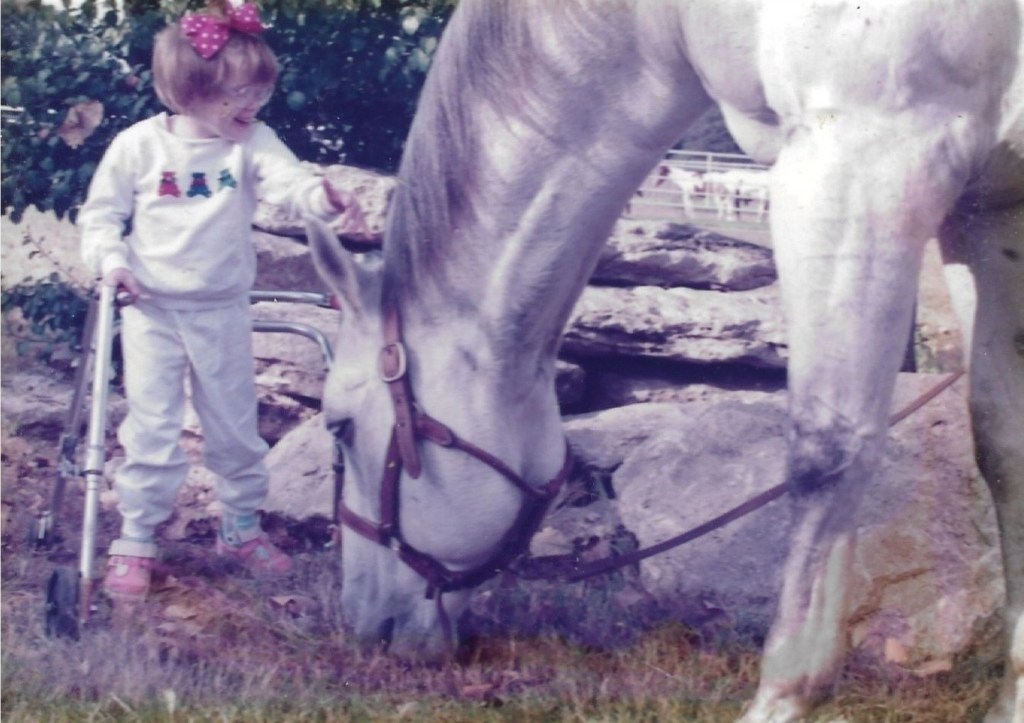
TJ was 16 years old, about 15.1 hands and the kids and I absolutely adored him. The stable had tried to use him for the therapy program, but TJ didn’t have the disposition for it. He was full of personality and would literally eat anything including…his own poop. At the time Juliann was using a walker, and he loved to grasp it with his teeth and carry it around the barn. He also took every opportunity to nip. I had to watch him like a hawk; in turn he would watch me and with a twinkle in his eye, and if I became distracted, he’d nail me, looking extremely pleased with himself afterward. He was also my introduction to a cribber.
Cribbing, is when a horse takes hold of a surface with its teeth and pulls back while taking in air. It is the most common stereotypical behavior in horses. Cribbing can also be deadly, because it interferes with a horse’s normal gut action, which in itself is a delicate balance. Some horses repeat this behavior for hours. In order to prevent this behavior in horses a special “cribbing collar” is used. The collar is fastened around the top of a horse’s poll, just behind their ears and under their neck close to the horse’s head.
At this point I had decided to give up riding lessons. I didn’t have time for them anyway. Instead, I returned to my fluid form of riding that Missy had taught me. I often rode TJ bareback and enjoyed many afternoons and evenings, not just riding, but brushing and interacting with him. He had a layback personality, meaning he wasn’t fazed by much, which also made him a perfect mount for the kids. In turn, they often rode him.
TJ had spent most of his adult life performing in the show ring and he had collected significant points in “Western Pleasure.” He was very familiar with a large variety of stimuli which made him “bullet proof,” or a dependable mount. He was also the kind of horse that you had to keep a firm leg on in order to keep him moving forward. And if he suspected that you didn’t know what you were doing while riding him, he tried every trick in the book to take advantage of the situation.
One truth I have learned while working with horses, is to always expect the unexpected. Particularly when a horse eating monster, such as a plastic bag carried by the wind, or a misplaced bucket, triggers their inner “flight” instinct. Horses are flight animals which means that their natural response to frightful situations is to run away, just like a rabbit or deer does when they’re afraid. The key to handling this “flight” instinct, which can easily turn dangerous, even deadly, is to teach your horse how to respond to their fear in ways other than bolting. This takes time, but it’s well worth the practice.
As I worked with TJ, I was also beginning to learn two essential lessons that have helped me in more situations than I can count and they are; one, teach your horse that you are a “safe haven;” two, the more frantic situation becomes, the calmer you need to be.
I taught TJ and all of my future horses, that I was a “safe haven,” which meant that I was a trustworthy and gentle handler, that they could turn to when they were afraid or when they escaped from their stalls. I achieved this trust with a variety of interactions other than riding. Repetition and consistency were very important to my success, followed by maintaining the rewards my horse’s came to expect. One of the tricks up my sleeve was playing the “halter game.”
So often, on the days I went to ride, TJ was out in the pasture grazing. He would see me approaching him with the halter and wouldn’t let me within 10 feet of him. Chasing after him was not only frustrating but equally exhausting. Then I began playing a game in his stall where I slipped the halter on and gave him a treat. I repeated slipping on and taking off the halter, until he started to get the hang of it. Then I began then I took the halter game to the open pasture. Sometimes I spent time with him, scratching all the itchy places a horse can’t reach, leading him around, and always releasing him to roam free. Eventually, TJ would come to me when he saw me approaching.
A common mistake I have seen throughout the years is when an owner reprimands their horse when it escapes from its stall, a pasture or even a handler. Instead of hitting the horse or scolding it, stay calm, and praise your horse when it returns to you. The use of treats really help to reinforce this! By teaching your horse that you are always a safe haven they learn that they can return to you and be safe.
One of the most important safety lessons I learned was the need to stay calm when a horse to panics. This is a conditioned skill that I have practiced over the passage of many years, am still learning and one that also came in handy while I was raising my kids.
Let me interject here, of course, a horse’s bad behavior needs to be addressed. I’m a firm believer in establishing method’s that discipline and teach a horse, you can’t do that. Horse’s need to be well mannered. Natural Horsemanship training methods taught me how to achieve a desired behavior without hitting a horse.
As my boys grew, they were diagnosed with what was then a new medical term called ADHD. At the time, many medical professional dismissed ADHD as nonsensical. But as I read about this condition with the goal of helping my children, I also learned about myself. Suddenly my own childhood experiences in school made perfect sense. I too have ADHD and am also dyslexic. This was an eureka moment for me which left me thinking, no wonder!
When I owned TJ, I was functioning as a full-time mom, raising my kids by myself, to support my husband’s successful climb up the corporate ladder. Almost every week his work took him out-of-town, while I raised our children. TJ and my other horses became my means of comfort, my stress relief and even though I was working as a fitness professional teaching 4-5 aerobic classes 5 times a week, horseback riding was and still is, my favorite form of exercise. Throughout our marriage, my husband has always lovingly understood this need in me.
One day, I friend of mine asked my if I had a horse she could ride. With TJ in mind, I said yes. I knew my old boy would be the perfect fit. I asked the owner at Rocky Top if he had another horse that needed exercise that I could ride with my friend. He did. That’s when a 5-year-old, Quarter Horse mare named Rose, entered my life. At the end of our first ride, I knew that I absolutely had to own her.
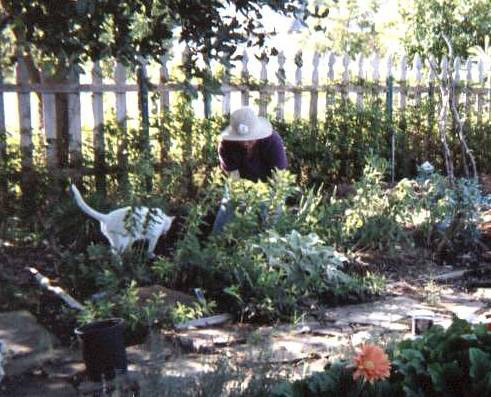
Donning my gloves and a big floppy hat, I ventured into my garden carrying a catmint plant. Butterflies fluttered among the flower blossoms in zigzagged patterns. Engrossed with their work, they appeared unconcerned with my hovering presence and sampled the catmint even as I planted it.
The butterflies’ diligence attracted bees. They canvassed my garden to see if the flowers contained enough nectar for them too. Apparently satisfied, they collaborated with the butterflies, working side by side. Watching them instilled a lovely sense of satisfaction, inspiring me to sit back and enjoy the pleasures my garden offered.
Strawberries warmed by the sun released a pleasing fragrance. A variety of herbs such as rosemary, basil and sage, flourished with edible offerings and combined their pungent scents with roses and lavender, creating an enjoyable potpourri.
Sunflowers and zinnias adorned the walkways, with thyme and lemon balm. Clay pots, filled with various types of mint and chocolate geranium were nestled among the flowers.
A mockingbird sang a repertoire of songs from a neighboring tree. It took several minutes to locate where he was through the maze of branches. Choosing the security of a top branch, he performed his serenade while watching the world evolve around him.
Each spring is the beginning of a new and wonderful season of growth. Tender sprouts surprise me with their appearance, as seeds take root in unexpected places.
Working in my garden reminds me of the immense value in nature’s lessons. There is strength to be found in its simplicity.
My garden is spiritual. It provides the perfect setting to reflect upon the things of God. His character is displayed through every leaf and bloom and when the setting sun casts shadows upon the pampered beds, His Presence draws near.
Perhaps God intended a colorful, fragrant reminder that life is too precious not to stop occasionally and enjoy the wonder of simple pleasures—to recognize the seasons of nature mirrored within our own lives as we journey through times of growth, times for harvesting the fruits of our labor and a time for rest and inner renewal.
As I watched the butterflies a realization came to me—it’s the later part of their life that brings forth their beauty. No longer are they earthbound, they stretch forth new wings and fly unfettered, leaving earthbound concerns behind. Oh what joy there must be in such liberty, to be free to flutter unrestrained through nature’s bounty. Butterflies have the ability to cause the cares of this world to momentarily fade away.
“O Lord, You have heard the desire and the longing of the humble and oppressed; You will prepare and strengthen and direct their hearts, you will cause Your ears to hear, to do justice to the fatherless and the oppressed, so that man, who is of the earth, may not terrify them anymore.” (Psalms 10:17, Amplified Bible)
Seven-year-old Juli smiled as the bus driver unloaded her wheelchair. Pushing her toward the house, I listened as she told me details about her school day. They focused primarily on her new best friend, Michele.
I met Michele one day while volunteering at the school. Her mannerisms were solemn and she appeared uninterested in the other children. Few words passed between us, but a perceivable longing within her spoke volumes.
Michele’s parents enforced rigid rules that hindered the girls from socializing much outside of the school setting. Juli has cerebral palsy; she is no stranger to rejection from other children and occasionally adults. This appeared to be one of those situations. My parental instinct wanted to step in, to shelter and protect my daughter, But something in Juli’s response—tenderness for her friend—prevented me from intervening.
During the summer we learned that Michele was a foster child. To our dismay she was moved into another foster setting. We were told we would never see her again. I realized how difficult the circumstances in Michele’s life had opened Juli’s eye to see Michele’s need for a friend. Motivated by this revelation, I prayed, not sure about what to do next.
From the beginning God’s hand was recognizably involved in reuniting us. I learned through Child Protective Services (CPS) that Michele was a victim of severe neglect and abuse. After a lengthy attempt to rehabilitate her biological parents, the parental rights were evoked, placing four children into the states care.
I could not understand why the door did not open right away for us to bring Michele permanently into our family. Within my heart burned a vision of taking her in. I found my “mothering nature” frustrated. The Lord led me to Habakkuk 2:3 (Amplified Bible), “For the vision is yet for an appointed time and it hastens to the end [fulfillment]; it will not deceive or disappoint. Though it tarry, wait [earnestly] for it, because it will surely come; it will not be behindhand on its appointed day.”
My initial contact with Michele was always through her case worker. Occasionally several months would pass by without any contact with her. During those periods I grew anxious with concern until I rendered the situation to God, throwing up my hands in surrender. This was the lesson He was teaching me—the process of surrendering. When I acknowledged Him as the caretaker to our relationship with Michele, the doors opened and we were united again.
Often I questioned if my efforts to influence Michele in a positive way were fruitful, especially when returning her to her foster setting after a lengthy visit. My evaluation of her progress was based upon my perspective, what I thought I should be seeing. But God’s perspective was different.
When I took my eyes off Jesus, in stepped depression and feelings of inadequacy. The Lord encouraged me to press forward, to stop limiting Him by what I saw and to exercise my faith. When I ventured too close to the point of giving up, He led me to Galatians 6:9 (Amplified Bible), “And let us not lose heart and grow weary and faint in acting nobly and doing right, for in due time and at the appointed season we shall reap, if we do not loosen and relax our courage and faint.”
After seven years of sponsoring Michelle, my husband and I became her foster parents—the first step to her adoption. Preparation for her adoption included reading her case history, The records revealed that almost immediately after her biological parents lost rights, God brought Michele into our life. So as Michele reminisces about the different people and foster settings (there were many), I remember them too.
Several years have passed since Michele became officially ours. Looking back, I understand why it was essential to trust in God’s wisdom and timing. While I perceived the years we had to wait as unproductive, God was silently preparing my husband and me to become Michele’s parents. At the same time, Michele developed bonds of attachment and trust with us. If I had forced my will upon my family, ignoring God’s preparations, the challenges we encountered after she moved in, would have torn our family apart.
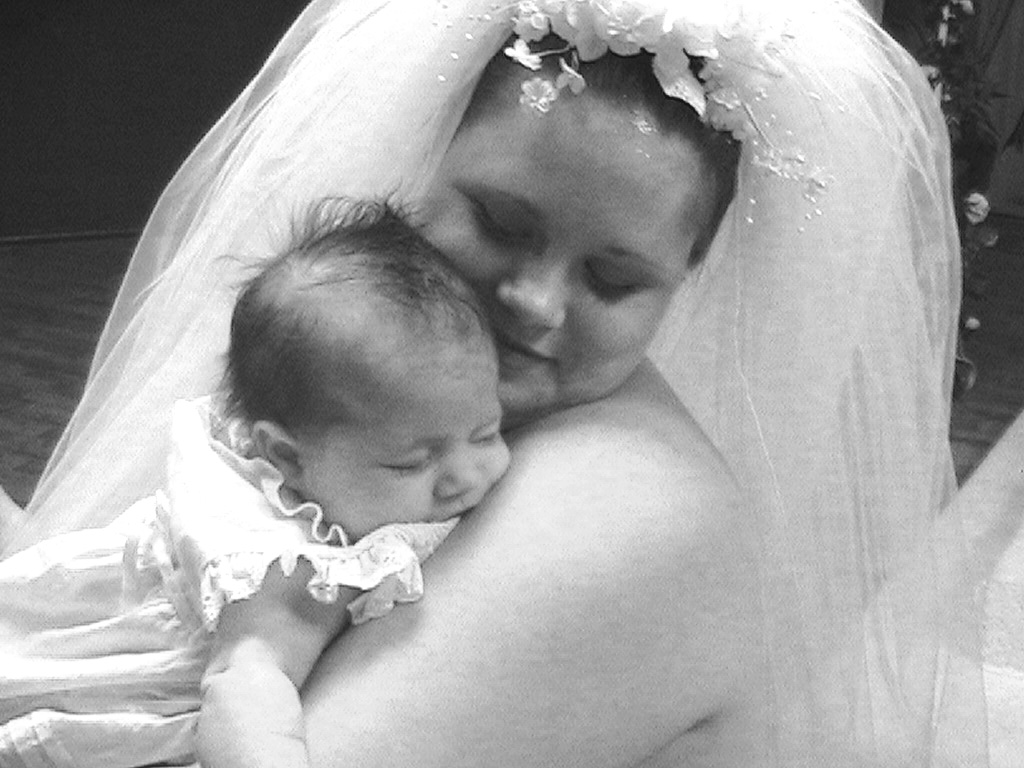
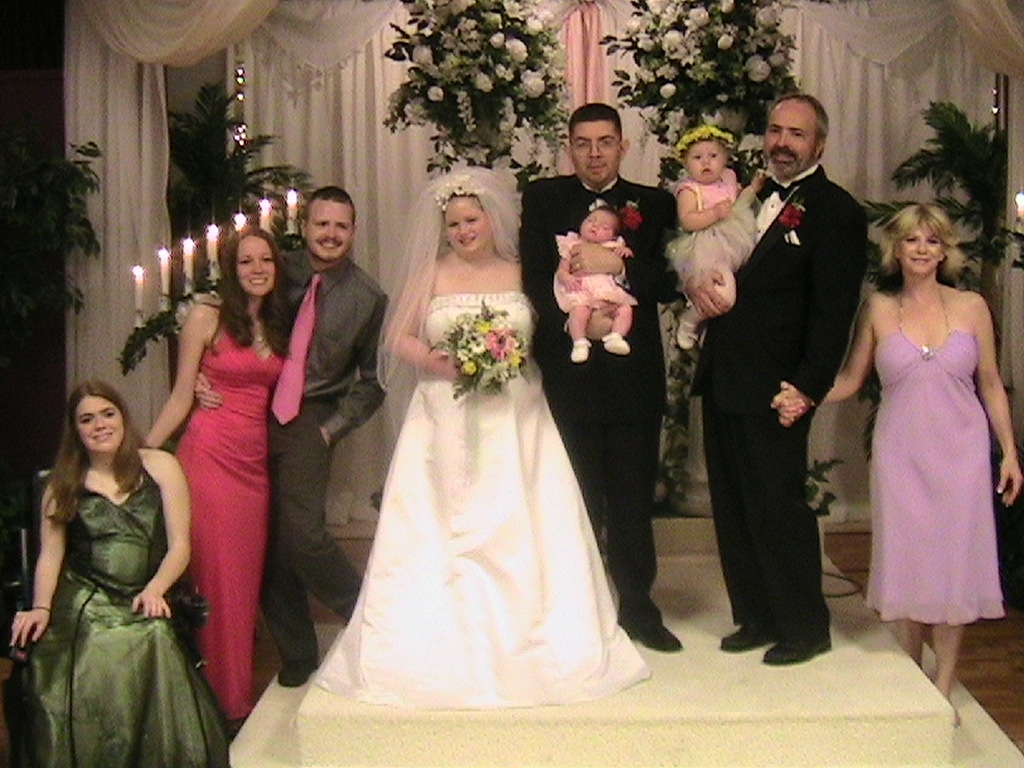
Our family photo at Michele’s wedding: starting left; Juli, Erin (Chris’ wife), Chris, Michele, Eric holding Serenity, Jeff holding Trinity & me.
Instead of destruction, my family walks under a covering of blessing. We recognize the privilege God has given us. It echoes through the house while my daughters laugh, fix each other’s hair, and on occasion complain that her sister is being a is bother. It reflects through the eyes of a young woman who found herself a home—a family—but most importantly, a God Who lovers her.
MY FRIEND GOD By, Michele
A very large part of who I am, And what I can hope to be, May be found in the fact That You are here, In the lessons that You’ve taught me. You taught me to listen. You taught me to care. You taught me to laugh, to love and to share. You taught me that I’m never defeated, Until I give up and no longer try. To taught me to know that one man’s joy, Is another man’s reason to cry. You taught me that no one’s perfect— That no one always wins. And that everyone falls short sometimes And everyone sins. You taught me that You’re always here, That you care when I feel pain. You taught me that there, with every loss, Lay the seeds of a much better gain. I remember when I first reached out to You. Then I felt my torment end. I will always be grateful, always give thanks, To You… my God… my Friend.
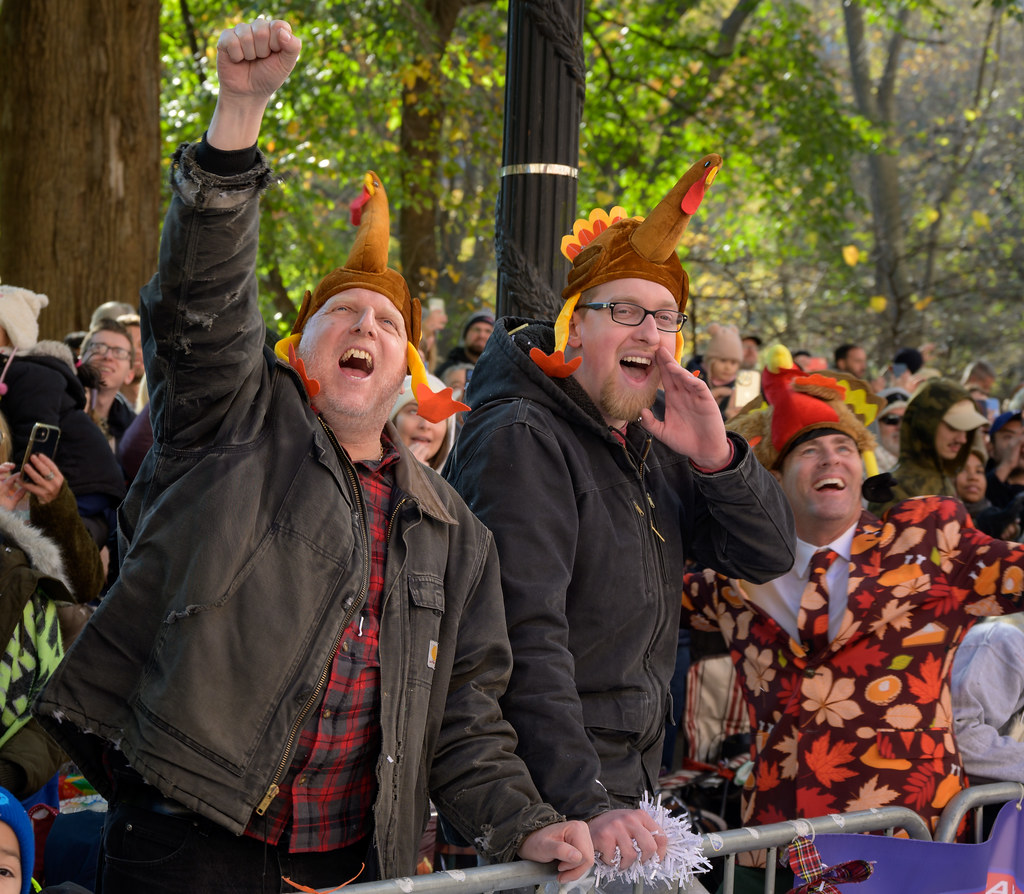
For 100 years, Americans have watched the Macy’s Thanksgiving Day Parade as part of their Thanksgiving Day tradition. As history has unfolded and the country encountered periods of growth, decline, war and peace, the parade has consistently served as a joyous reprieve for millions of people.
It began in New York City in 1924, when employees from the famous Macy’s Department store decided to celebrate Thanksgiving Day with the European custom of a parade. Most of the employees were first-generation immigrants. Dressing up in costumes portraying clowns, cowboys, knights and sheiks, they marched the streets of Manhattan accompanied by professional musicians and animals from the Central Park Zoo. The Parade began at 145th Street with an audience estimated at a quarter of a million people and ended at 34th Street, where Macy’s Department Store still operates today. The first Macy’s Thanksgiving Day Parade was a huge success, and it continued growing until eventually the entire nation was part of the festivities.
The most distinctive feature of the parade is the large, helium ballons. The balloons made their first appearance in 1927, in the form of the cartoon character Felix the Car. For many years, the balloons were released into the air where they often floated for several day. People searched the sies in hope of spotting one or retrieving a fallen balloon and exchanging it for a prize.
The stock market crash of 1929 threw America into the Great Depression. In 1933, close to 13 million people were out of work and many other were employed only part time. More that 750,000 farmers lost their land, and hundreds of thousands of people lost their life savings as a result of bank failures. The Macy’s Thanksgiving Day Parade provided a brief respite to the stark realities of the Depression, thrilling children with balloons portraying beloved Walt Disney characters and providing adults with free entertainment. Thanksgiving Day, 1934, crowds numbering more than 1 million people lined the curbs and sidewalks of New York City to watch the parade. Millions of others listened by way of radio broadcasts.
The Japanese bombed Pearl Harber on Dec. 7, 1941, and the United States entered World War II. The next year, the Macy’s Thanksgiving Day Parade came to an abrupt halt. The U.S. government needed helium and rubber for war-related supplies. With an estimated 15 million men and 338,000 women serving in the Armed Forces, Americans did not have much to celebrate. The Japanese surrendered on Sept. 2, 1945, one month after the United States bombed Hiroshima. That November, the Macy’s Thanksgiving Day Parade resumed, and for the first time, New Yorkers had the option of watching the parade on television.
During the 1950’s, the United States experienced a period of rapid economic growth. Instead of listening to the parade in radio broadcasts, the Nation watched on television. Celebrities began making live appearances. Some of the first celebrities to appear included Sid Caesar and Danny Kaye. The economic increase continued into the 1960’s. In 1961, the large balloon of Bullwinkle the Moose made its first appearance. Children eagerly waited for a glimpse of other favorite cartoon characters, such as Underdog.
The Macy’s Thanksgiving Day Parade has never been canceled due to bad weather. Except for World War II, the parade has always marched on, regardless of rain, sleet, or snow. Once in 1971, the large balloons were withdrawn, because of strong winds that rendered them unsafe. Television networks supplemented to lass of the balloons be interjecting clips of balloons from the previous year.
Perhaps the most anticipated moment of the parade is the arrival of Santa Claus to Herald Square at 34th Street and Broadway. His appearance always concludes the parade, the only exception was in 1932, when Santa actually led the parade. Santa’s arrival also signals the beginning of the Christmas season. When President John F. Kennedy was assassinated in 1963, less that a week before Thanksgiving Day, the parade proceeded as scheduled, placing the needs of the children ahead of a Nation in mourning. This November, as the nation celebrates Thanksgiving, many Americans will again celebrate the freedom and joy of the parade.
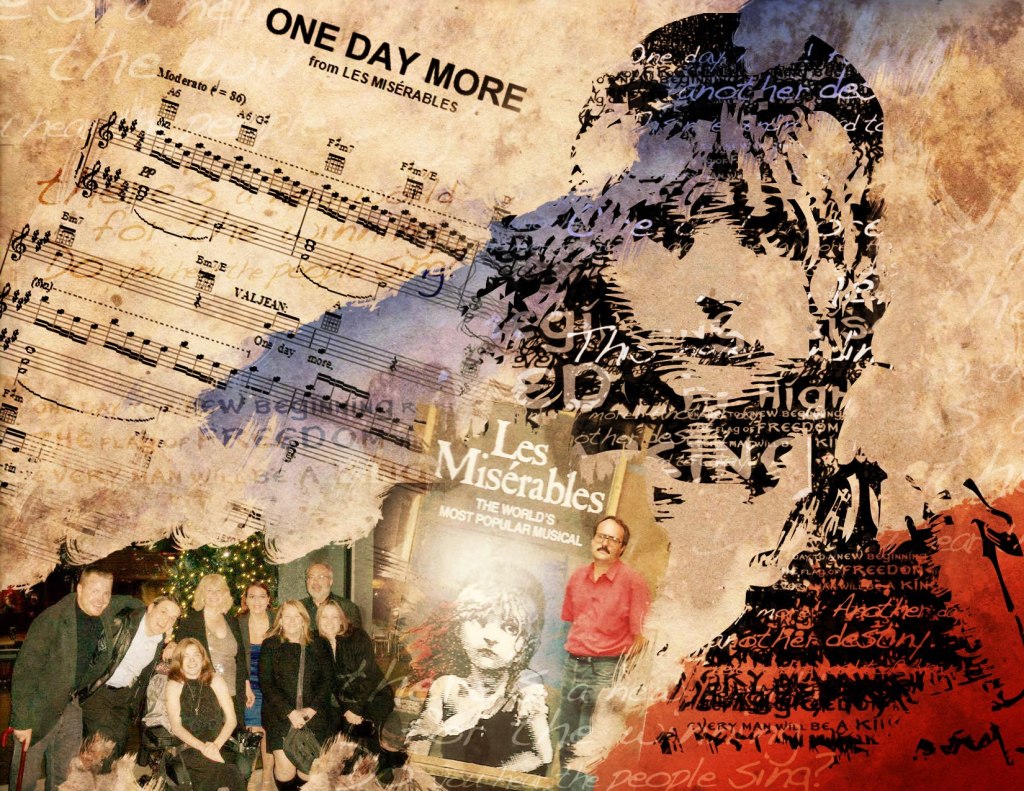
A graphic Juliann made of our family going to one of our “Les Misérables” performances.
For Christmas last year, my daughter, Juliann, gifted me with a ticket to go with her to see the 2005 Broadway tour of “Les Misérables.” I was thrilled! “Les Misérables” became an integral part of our family in 1987, when it first opened in NYC, at the Broadway Theater. At the time, my husband, Jeff, was in Manhattan for a business trip and happened to catch the show. Inspired he called me later that night, full of sentiment expressing how “Les Mis” had worked his emotions from laughter to tears, describing the story and the music. Then he told me that he was going to buy the soundtrack and when he returned home, we would take an evening together, just the two of us, to drive around and listen to the beautiful songs. On night, that’s exactly what we did! Driving through the neon lit buildings down the streets of Dallas and Fort Worth, we pumped up the stereo submerged in Claude-Michel Schonberg’s award-winning score. Jeff told me what was happening with each song, and as soon as we were able, he took me to NYC, so I could experience “Les Mis” for myself. For years afterward, whenever Jeff and I visited Manhattan, we took the opportunity to go see “Les Misérables.” During one of those trips, we learned about, and began to frequent, the little coffee shop across the street from the stage door of the Broadway Theater, where the cast and crew members sometimes gathered. As soon as our children were old enough, we took them to the Broadway tours that brought “Les Misérables” to our cities. When my grandson Aldon was still a tender age, I took him to see “Les Mis.”
Aldon at Bass Performance Hall
Aldon is very musical and plays the trumpet. Jeff and I take him to a Broadway show every year, but so far, to date, “Les Misérables” is his all-time favorite. The day after we saw the show, he sat with me and watched the entire anniversary DVD with the original cast. Last Friday night, after Juliann and I had spent three months savoring our anticipation to once again, see “Les Misérables,” we entered Fort Worth’s outstanding, Bass Performance Hall, and were led to our seats. I couldn’t believe it when we discovered that we were only four rows from the stage! For all of my previous productions we always sat way in the back of the theater, which does have appeal because of the visual for the special effects. But for this performance, Juli and I would be able to see the performers expressions! As the house lights dimmed and the familiar stanza to the score filled the theater, the lights behind the scrim revealed chained prisoners rowing a ship. I sat back as the scrim lifted and melted into the journey that is “Les Mis,” allowing the cast, musicians and crew, to once again, transport me to Paris in the year 1832. The cast to the 2025 tour of “Les Misérables” is led by Nick Cartell as Valjean and Nick Rehberger as Javert. Both actors gave memorable performances that rose above and beyond what “Les Mis” fans have come to expect, particularly with their powerful vocals. David T. Walker, as the innkeeper almost stole the show, as he drew the audience to him with his cleaver antics that kept us laughing and watching to see what he would do next. Adding the bird to “this and that,” made the audience roar. Equally appealing was Vicotria Huston-Elem for her portrayal of Madame Thenardier. I especially enjoyed her use of a loaf of French bread as a prop! Lindsay Heather Pearce was the most tender, heart-wrenching Fantine I have ever seen. Her portrayal of the character, her tenderness and love for Cosette and contemplative rendition of “I dreamed a dream” made Juli and me cry. Kyle Adams, as Grantaire was another actor I kept my eye on especially during “Master of the House,” and at the barricades, where he drunkenly, stays beside his mates, despite knowing that he’s going to die. I was particularly moved as he held and wept for the fallen Gavroche. Since covid, there have been a great many changes to the presentation of too many classical Broadway productions. Sadly, not all of these changes have improved the quality of the shows. One in particular is the new staging and set for “Phantom of the Opera,” which is publicized as “new and revised,” when it should really be publicized as “stripped from its original splendor due to budget cuts that have changed the set and staging and significantly damaged the audience’s experience of the show.” I walked out of that show deciding never to pay for a ticket again. Then, there are the revisions to the beloved, classical Rodger’s and Hammerstein’s musicals, where the original scripts and scores have been so altered it’s difficult to recognize the original classic that theater goers have grown to expect and love. Noteworthy is the new rendition of “Oklahoma,” where audience members in swarms left after (or before) the first act ended and the word of mouth was, whatever you do, DON’T’ take your children to it! “Les Mis” too has been restaged, the most significant change for me is the removal of the original turntable. I first noticed this when I took Aldon to the show. But even with the loss of the turntable and barricades coming together in front of our eyes, the staging to this current “Les Mis” tour, directed by the talented Laurence Conner and James Powell, is masterful! Both directors have drawn from their cast “milked” moments that actually pulled the audience further into a scene. As a result, every song and each interaction became just a bit more memorable. The audience, packing the house, seemed to agree as they hooted, whistled and hollered after every song, momentarily causing the show to stop for an elongated pause. In writing about the talented ensemble, it would be a crime not to acknowledge the troupe of talented musicians, to whom without, “Les Mis” is nothing. The reason why musical lovers flock to this production is to become immersed in the music that most of us have memorized. It is the music that carries the audience through the journey and in this current production, the beautiful voices blended with the musician’s harmonics, staged by Geoffrey Garrant, do just that. I urge you, particularly if you have never seen “Les Misérables,” go and enjoy this current production. Take the whole family, dress up, go out to dinner and make a nice evening of it. The experience is worth the price of the ticket. Come and join the crusade of theater goers who have marched and raised their glasses to the anthem, “Do you hear the people sing, singing the song of angry men…”
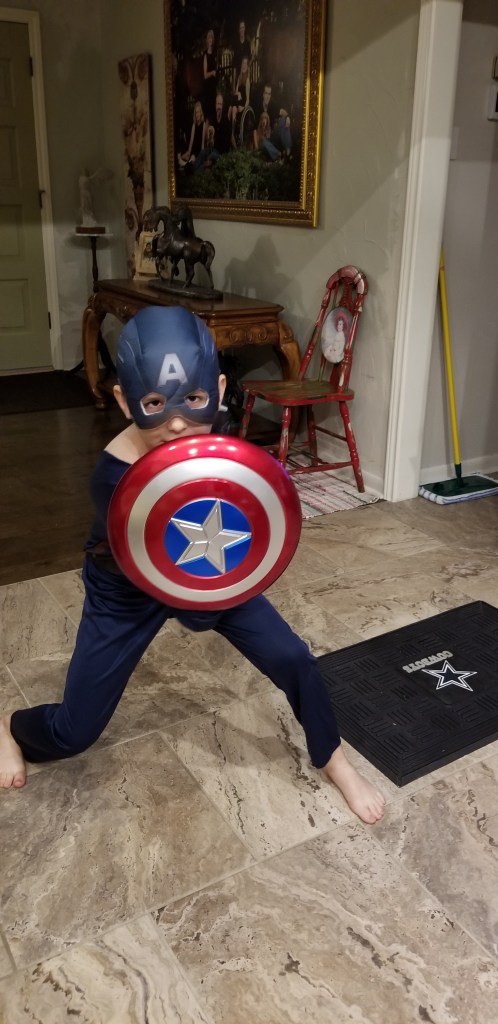
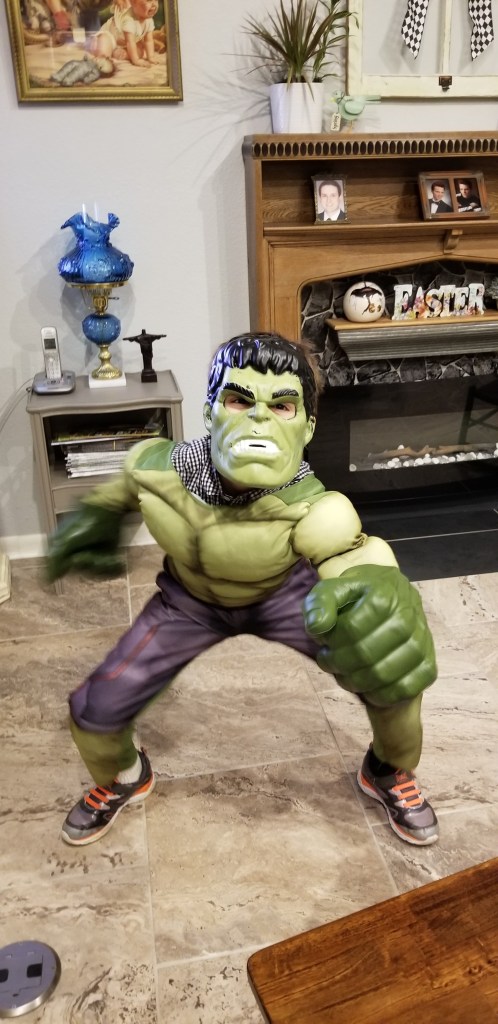
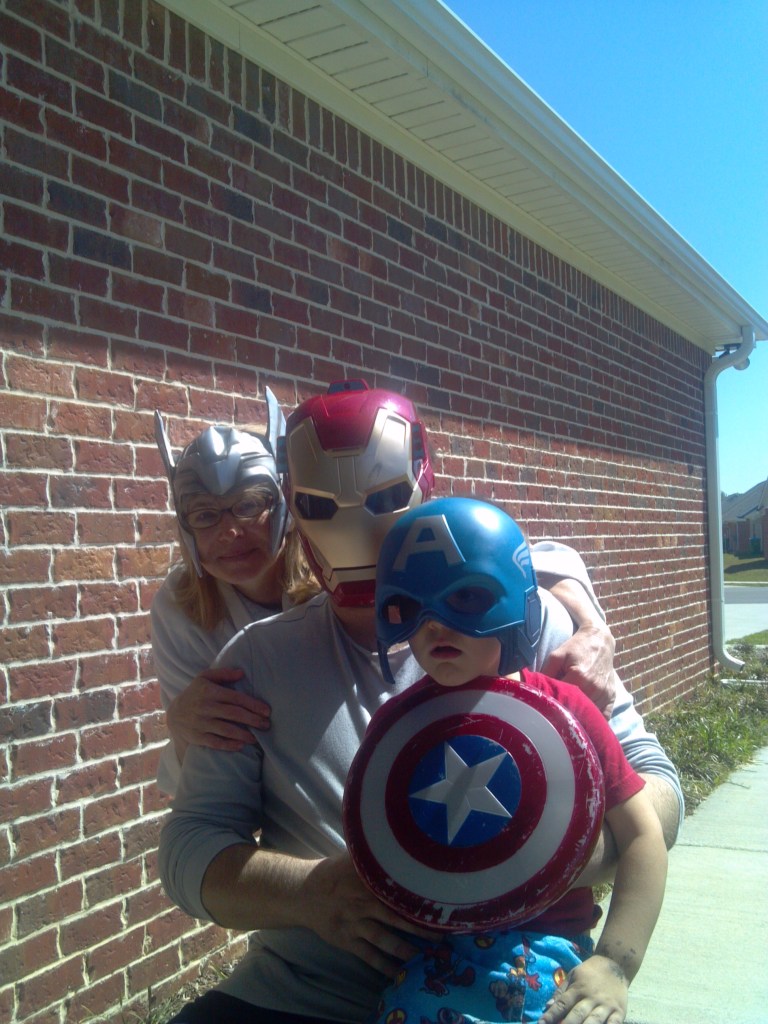
2018 It’s happened to Jeff and me before! We’re going about our everyday lives, filled with restful pauses and quiet evenings, then BAM! Captain America turns our world upside down! Mind you, we anticipate these invasions with great joy, planning ahead the things we will do.
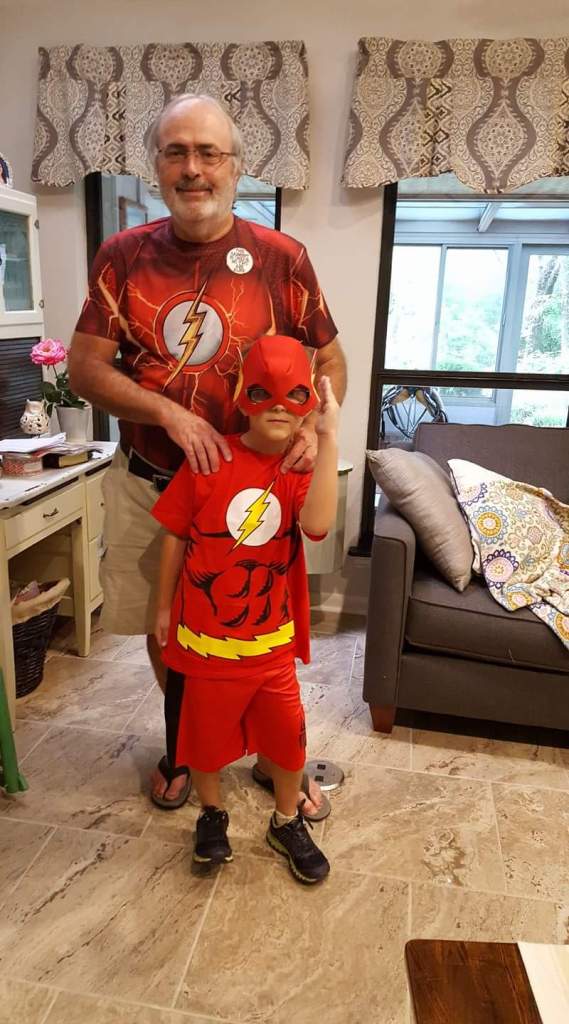
Sometimes Cap morphs into the Hulk, filling our house with roars and grunts, Hulk smashing the furniture and floors. Last summer, he was the Flash, running through the house at top speed, slicing his hands in the air.
This Avenger Invasion is fueled by his father’s intense love for the Marvel characters, particularly, Iron Man. His grandfather, Jeff, joined in the fun by downloading an app for his cell phone, which allows Jarvis, from the Iron Man movies, to inform him when he gets a call.
Jeff & Aldon, ready to ride the bike trails
My husband outfits our Avenger, Aldon, with grandpa and grandson matching outfits that they wear when hitting the bike trails. They go on long rides, last summer accumulating over 200 miles! Together they stop at restaurants along the trail for a cool drink and rest.
Aldon, informed me last fall that he was tired of getting only Avenger toys for Christmas and would like Santa (yes, he still believes) to include a few Star Wars toys. So, we bought him a BB-8 bike helmet, along with Star Wars knee and elbow pads. The pads he no longer wants to wear.
Currently, Aldon sleeps in a Spider-man tent bed when he visits our house, which is during all his school breaks and summer vacation (Aldon lives in Mississippi). I secured pockets that attach to the rail of his bed, so he can stash his flashlight, Minion & Avenger toys and a thermos of water because he gets thirsty at night. For all his tough boy habits, he has a bunny nightlight, because he grew up with it in his Texas room and still finds it comforting. When he wakes up in the morning, he crawls in bed with me to cuddle. I hold him tight, putting up with his “morning breath” because I know these tender, little boy moments are numbered. He’s growing up so fast.
Aldon with my horse, Dude
Aldon loves my horses and has been fearless around them from the time he could focus his eyes. He also loves to ride.
Every summer, since he was a little sprout, I take him to Six Flags Over Texas. We eat brisket nachos covered with cheese, cotton candy, and ride our favorite roller coaster, The Texas Giant, over and over. He also loves driving the Antique Cars and prefers that I sit in the back seat.
As we walk through the amusement park fond memories of all the years that Jeff and I bought season tickets for our children come to mind. I know the arrangement of the park well. Not much has changed with the layout since my kids were young. Some of the rides and stores are new and different. It’s such a joy to tell Aldon, “Your dad loved this ride too when he was a little boy.”
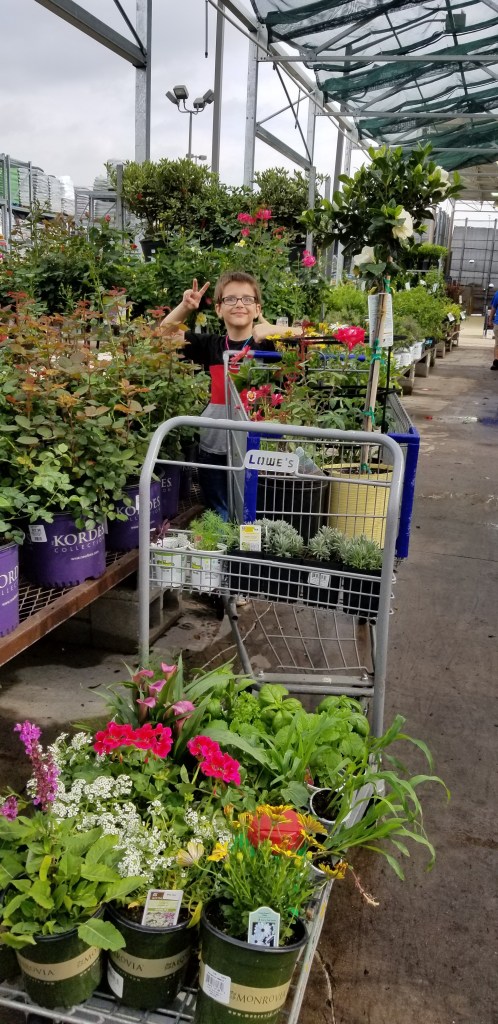
Shopping at Lowes.
Yesterday we worked in the garden. I took him with me to Lowe’s to purchase plants. He loves to dig in the soil. That afternoon we took a break to take the golf cart, Rodeo, to the stables to brush and turn out the horses. While we were brushing them, I was told that my future held a rousing game of Candy Land. He claims that he’ll win, but I replied, “I don’t think so!”
Later this afternoon, I’ll take him to swim at the YMCA while his grandpa plays racquetball with a friend. On our way home will pick up carryout for dinner. In two days, we’ll send him home back to Mississippi. He much prefers taking a plane versus enduring the ten-hour car ride (one way) it takes for me to pick him up in Mississippi.
As soon as our Avenger leaves to go back to Mississippi, our house will settle. But my heart will ache because my love for him is so strong. I’ll busy myself, wiping away the dust, washing floors and fingerprints, scrubbing his bathroom clean and packing up most of his toys. I always leave one or two still out, because it makes me feel close to him.