

A disease called Cushing’s or Pituitary Pars Intermedia Disfunction (PPID) is commonly found in older horses. PPID is caused when a small area located at the base of a horse’s brain called the hypothalamus, malfunctions. The hypothalamus is connected to the stalk of the pituitary gland. Despite its small size, it has a big job because it regulates the physiological functions in a horse’s body by linking the nervous and endocrine systems together and keeping them functioning in sync.
Malfunctions within the hypothalamus happen when oxidative stress and additional damaging factors, prohibit the neurons within the hypothalamus from functioning normally. Suddenly, the pituitary gland is left unregulated. It malfunctions and begins to over produce hormones.
Oxidative stress is caused by an imbalance between the oxidant and antioxidant levels in a horse’s system. These imbalances are generally seen in horses who are professional athletes partaking in strenuous endurance and other intense competitions and are the key reason why it’s accentual to maintain a good level of balance between a horse’s exercise and a well thought out dietary plan that meets their metabolic needs, meaning a diet rich in minerals, vitamins, enzymes and proteins. When a horse’s metabolic system is balanced, the horse is less apt to experience oxidative stress.

Cushing’s, PPID, not only affects the metabolic system. It also affects the functions in the adrenal glands, immune system, digestive system, reproduction system, musculoskeletal system and finally the nervous system.
As a horse enters the natural aging process, which usually begins when a horse is in its late teens, progressing into their twenties and thirty plus years, the probability of them contracting PPID significantly increases.
In 1956, scientists developed a theory called the “free radical theory of aging.” This theory also applies to humans! The theory suggests that as we age, our metabolic systems begin to decline. This decline causes the build-up of “free radicals” within the metabolic cells, where nutrients are broken down and converted into energy. Over time, the metabolic cells are damaged, which leads to oxidation stress. The damages not only contribute to the age-related decline in both people and horses, but it also spawns a variety of additional health complications. All equine breeds and genders are susceptible to PPID which is the most common endocrine disease in aging horses. In people, it’s diabetes.

For several months Roo was turning up lame every time I had his hooves trimmed. At first, I thought that my farrier was trimming his soles too close. But the problem only became more extreme. I called my vet and had him x-ray Roo’s hooves. Doc Murphy took one look at him and immediately suspected Cushing’s. (I have to interject that another vet, who had just given Roo his annual inoculations and exam, didn’t notice the symptoms, which stresses the importance of us as horse owners to educate ourselves and build our awareness to the possibilities of PPID! And by the way, I fired that vet.)
Immediately Dr. Murphy drew blood samples for testing. On the following Monday, he called me with the tests results—Roo definitely had Cushing’s!
To my absolute distress and regret, I didn’t catch it or have any suspicions that Roo might have PPID! This stemmed from my own lack of knowledge and by sharing my story, I sincerely hope that other equestrians managing aging horses, will research PPID so they can identify the early symptoms.
The problem for me was, Roo wasn’t presenting with the symptoms that I associated with Cushing’s. Roo had shed his winter coat normally the spring before, which is something a horse struggling with advanced Cushing’s cannot do. Second, his fur wasn’t long and curly, another sure sign. However, what he was struggling with was laminitis. Laminitis is a painful condition that causes the Velcro-like laminae tissue of the inner hoof to separate from the coffin bone. Roo and I knew the condition well. We had successfully battled laminitis for at least fifteen years.
Immediately following his diagnosis, I began to research PPID and was truly shocked by how little I actually understood about the disease. The more I learned about the symptoms, the more I saw them reflected in Roo. Not only was I troubled by my lack of knowledge, but it was also a great embarrassment too, because I had never really researched the disease before. I had literally closed the gate after the horse escaped.
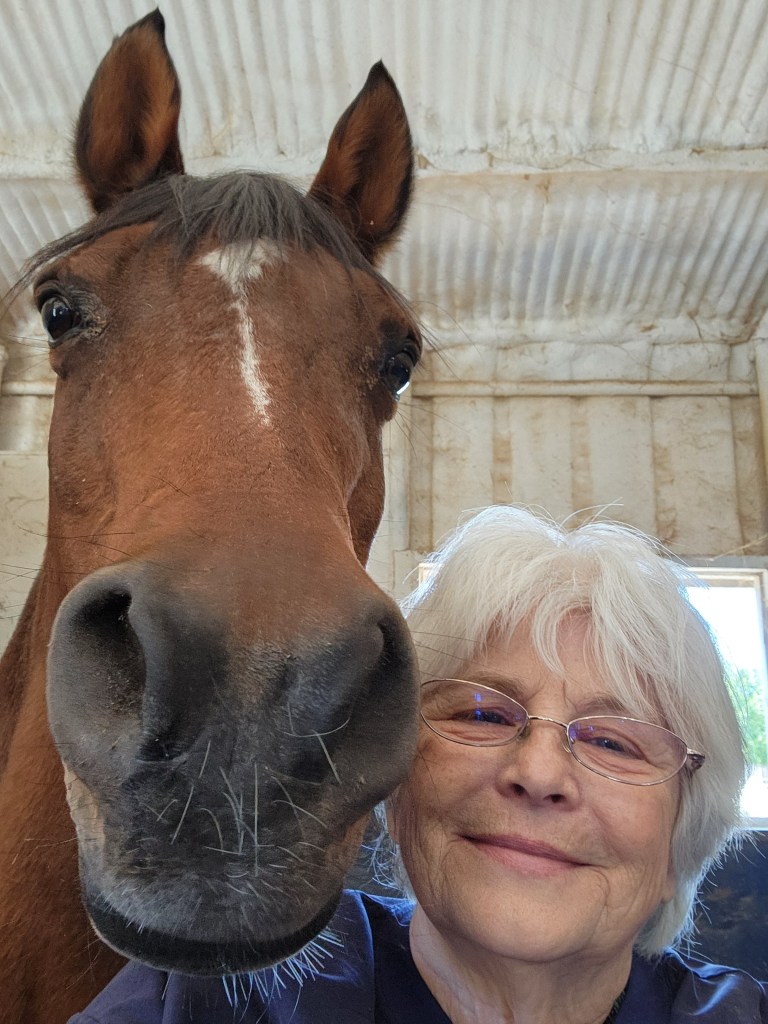
Over the last few years scientific research on PPID has significantly taken off. We’ve learned that reduced levels of dopamine are involved in the development of the disease. Genetics also plays a major factor. More research is being done on the connection between PPID and laminitis. As a result, veterinarians are now able to detect the disease earlier and treat it quicker. And with new medications and stringent diet balancing, horses with the disease can live happily for several more years.
I was always of the frame of mind that Roo would live at least into his thirties! He was my soulmate horse, a true and noble companion, full of delightful antics and playful fun. He was my heart. In all honestly, my vets and fellow equestrians couldn’t believe that he was pushing twenty-six years, because he looked young and healthy. The only thing that gave his age away were the gray hairs sprouting under his mane and forelock.
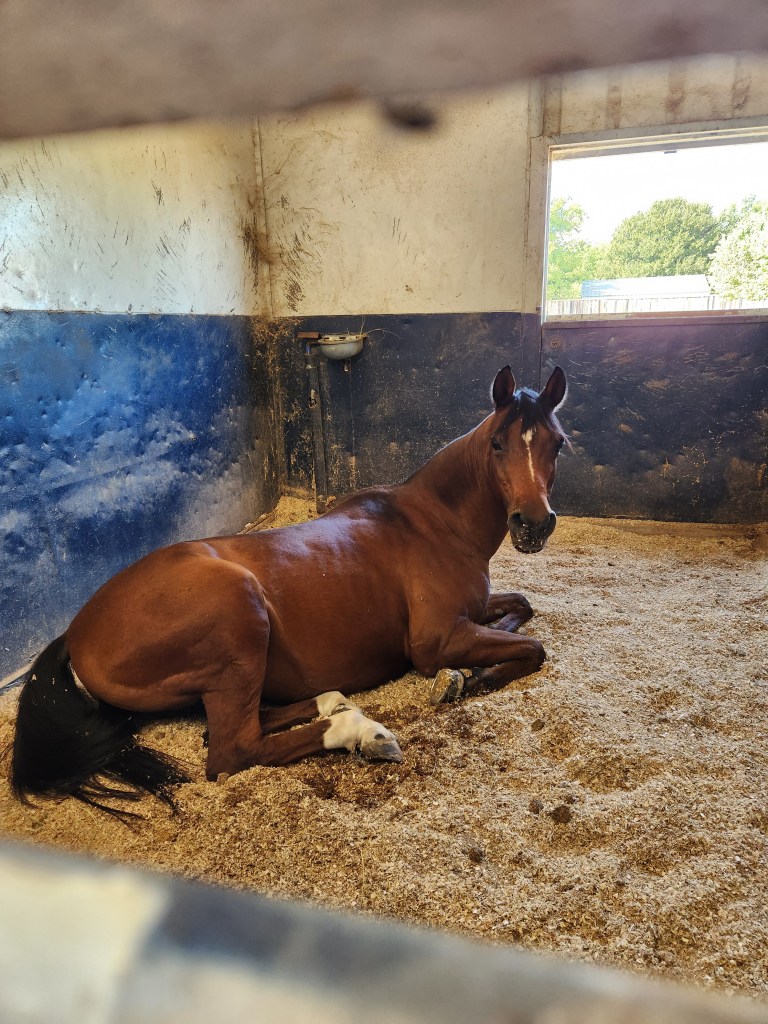
In cutting myself some slack, it helped me to understand that the first, early-stage indications of Cushing’s in a horse are very subtle. The changes in their bodily systems advance slowly and silently. By the time the most obvious signs appear, the curling and un-shedding of their coat, the horse has reached the advanced stages of the disease.
On the Monday that I learned about Roo’s diagnosis, Doc and I scheduled an appointment for him to come out on the following Thursday in the afternoon, to check me out on the medication Roo needed. However, I was absolutely stunned when over the passage of the next two days Roo’s condition rapidly deteriorated before my eyes. In addition, with each passing hour his body mass changed.
It was absolutely alarming! Fatty deposits and broken-down muscle formed significant bulges under his skin. These bulges literally resettled in new locations as the hours passed. He was sick and could hardly stand let alone take a step. I would arrive at the stable to find him lying down and sit beside him, relishing the unspoken but present love that ties us together.

About 15 years ago, Roo and I had fought a long, horrible battle against laminitis and won! But that’s a story for another time. For now, I could tell by the look in his eyes that it was time to free him from his pain and release him to graze in the heavenly pastures, where several other horses within our family, Rose being one, his mama mare Sugar being another, will greet and welcome him home.
Managing an animal’s death is just as important as managing their life!
I took both of the above videos while Roo and I were waiting for Dr. Murphy to arrive.
Throughout the years, I’ve repeatedly asked God, that when I pass on and enter heaven, I don’t want to see people first. Instead, I want to see, be greeted by and spend as much time as I want only with my horses and my golden retriever Daisy. I want to tell them all of the things I couldn’t communicate here on earth. Apologize for the things I did wrong, but mostly express to each of them how absolutely, deeply I have (and still) love them. But in my heart, I believe that they already know.

And so… close to the end of October 2023, in a lush, shaded autumn setting, next to a quiet pond, Roo and I spent our last fleeting moments together on this earth. And while I was with him the Psalms 23 ran through my head…
The Lord is my shepherd; I shall not want. He maketh me to lie down in green pastures; He leadeth me beside the still waters…

For several nights after Roo passed I sept with his halter and bridle. To this day it hangs on a hook adjacent to my desk. It still smells like him. Although he is no longer physically with me, he’s sweet presents still lingers, his soul is still attached to mine. Along with Rosie and my other beautiful equine babies and I can’t forget my beloved golden retriever, Daisy. And even though my animal family members have pierced my heart when they passed, I have been so richly blessed by all the years we spent together, connected and enjoying life.
